
LIM: Essential Cello Pedagogy for Music Educators
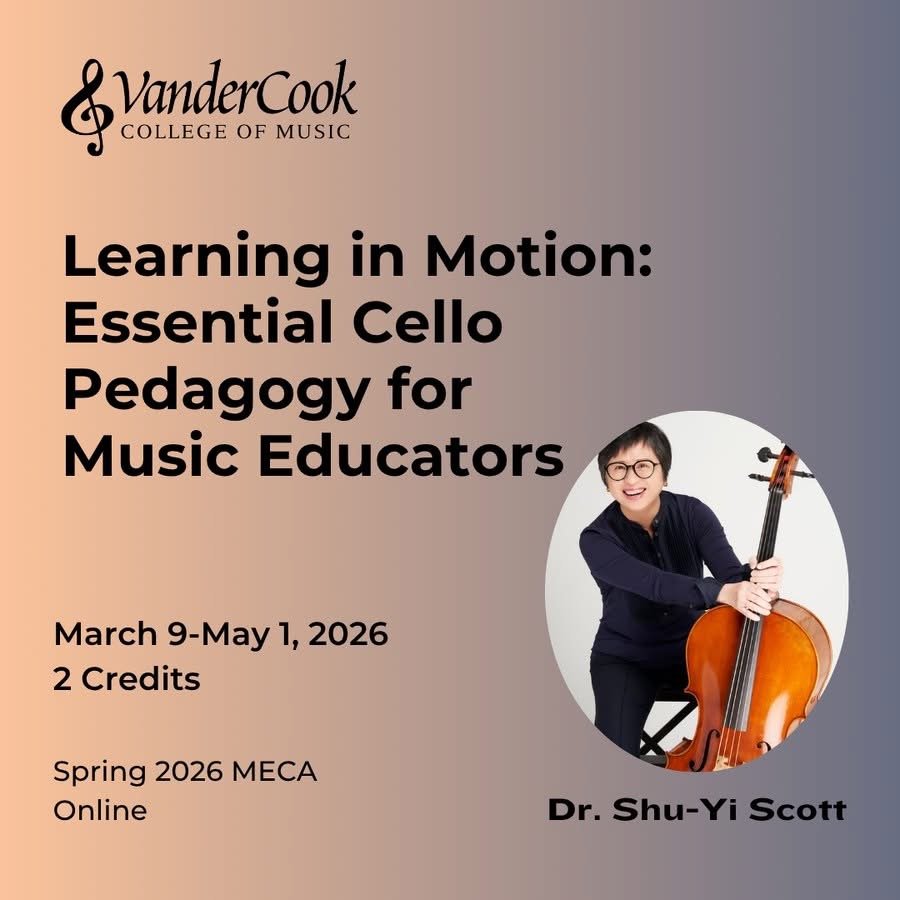
Teaching Beginning Cello When It Isn’t Your Primary Instrument
If cello isn’t your main instrument, being asked to teach beginning cello can feel daunting.
Many music educators—band directors, orchestra directors, general music teachers, and ensemble instructors—find themselves responsible for helping cello beginners get started, often with limited training, limited time, and very real classroom pressures. You may know what good cello playing sounds like, but translating that into clear setup, healthy technique, and confident first lessons can feel overwhelming.
This course was designed with you in mind.
A Practical, Rigorous Course—Built for Real Teaching Schedules
This asynchronous course offers the depth and rigor of a traditional semester-long class, while remaining flexible enough for busy teaching schedules.
Registration Link:
Vandercook Online Course: Learning in Motion: Essential Cello Pedagogy for Music Educators
📅 Dates: March 9–May 1, 2026
🌍 Anytime, anywhere learning: The asynchronous format allows teachers to engage with the course materials on their own schedule, from any location—making it possible to continue learning alongside full teaching responsibilities.
Through pre-recorded lectures, video demonstrations, guided practice activities, observation assignments, live online office hours, and asynchronous feedback, participants receive structured, meaningful instruction without needing to rearrange their school day.
You can rewind, revisit, and practice alongside the content—while still receiving expert guidance and feedback.
Learn What Matters Most for Beginning Cello
Using the instructor’s Learning in Motion approach as the guiding framework, this course focuses on the fundamentals that matter most in the first stages of cello learning—especially in classroom and ensemble settings.
Participants will gain hands-on strategies for:
Balanced posture and instrument setup
Healthy left-hand shape and finger placement
Functional, reliable bow hold
Producing a clear, resonant tone from day one
Sequencing skills so beginners build confidence instead of frustration
The emphasis is always on clarity, efficiency, and student success—not perfection or virtuosity.
Grounded in Trusted Teaching Materials
The course draws directly from Suzuki Cello School Volumes 1–2 and Essential Elements Volumes 1–2, helping educators bridge individual instruction with group and ensemble teaching. You’ll learn how to adapt foundational cello pedagogy for real classrooms—troubleshooting common problems, motivating diverse learners, and keeping students engaged even when progress feels uneven.
Support, Feedback, and Confidence
All assignments are submitted weekly and graded online, ensuring steady progress and meaningful feedback throughout the course.
By the end of the course, participants will walk away with:
A clear understanding of beginning cello setup and technique
Practical teaching strategies that work in classroom and ensemble environments
Increased confidence when demonstrating, correcting, and guiding students
The ability to support student growth from the very first lesson—even without cello as their primary instrument
You Don’t Have to Be a Cellist to Teach Cello Well
Teaching beginning cello doesn’t require you to be a cello major—but it does require thoughtful guidance, clear sequencing, and an understanding of how beginners learn.
This course provides the structure, insight, and support music educators need to help cello beginners start successfully—with confidence, clarity, and musical momentum.
Course Calendar:
Week 1-Cello parts, tuning, instrument care Posture and setup fundamentals Introduction to Suzuki philosophy
Week 2- Left hand shape, thumb placement, and note geography Teaching intonation with tapes and finger drills Lesson plan practice
Week 3- Finger patterns and shifting preparation Expanding scale knowledge (G, D major) Peer feedback and troubleshooting
Week 4- Bow hold techniques and tone production Weight, speed, and contact point exercises Demonstration teaching: open string tone
Week 5- Coordinating bow and left hand String crossings and articulation basics Troubleshooting tone and posture
Week 6-Sequencing lessons and introducing bow strokes Articulation, dynamics, and musical phrasing Mini teaching lab
Week 7- Teaching reading and ensemble skills Classroom management strategies for mixed-level groups Coaching strategies for group playing
Week 8- Final teaching presentations
Registration Link:
Vandercook Online Course: Learning in Motion: Essential Cello Pedagogy for Music Educators
