
Start Smart: First Cello Lessons that Click Course for CEPIC(Spain)
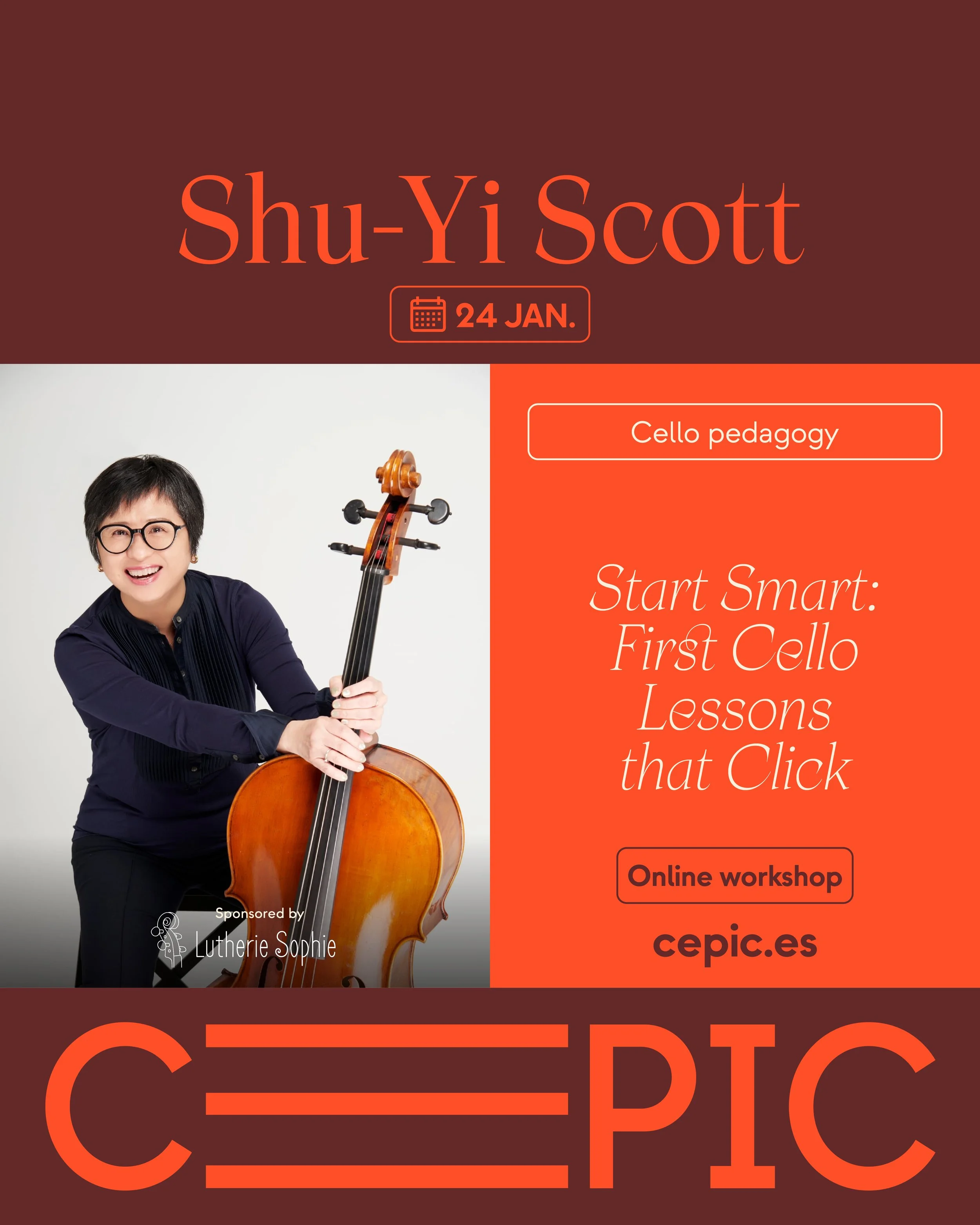
I am more than thrilled to offer this course for CEPIC- Centro para la Pedagogía de los Instrumentos de Cuerda- Center for String Instrument Pedagogy, Spain on
Date: January 24, 2026
Time: 9:00-1:00 (CT USA) or 4:00 p.m. - 8 p.m. (CET)
This course will be offered online only.
Start Smart: First Cello Lessons that Click (click to register)
After coaching cello teachers around the world, I’ve noticed one of the most common—and most costly—mistakes in beginning instruction: leading students to play notes too quickly, before their bodies, ears, and coordination are truly ready. With the best intentions, we rush toward repertoire, hoping music itself will solve setup, tone, and confidence. Too often, it does the opposite.
The very first cello lessons matter more than we sometimes realize.
Those early weeks shape not only how a child holds the instrument or draws the bow, but how they experience learning, practice, and progress. They also shape how confident teachers feel in their sequencing—and how clearly parents understand their role in supporting meaningful growth at home.
This workshop was designed to bring clarity, joy, and alignment to that crucial beginning.
Starting Cello Right: A Joyful, Clear Beginning for Teachers and Families
The very first cello lessons matter more than we sometimes realize.
Those early weeks shape not only how a child holds the instrument or manages the bow—but how they feel about learning, practice, and music-making. They also shape how confident teachers feel in their sequencing, and how clearly parents understand their role in supporting progress at home.
This workshop was designed to bring clarity, joy, and alignment to that crucial beginning.
A Clear Roadmap for the First Lessons
For teachers, one of the hardest parts of starting beginners isn’t what to teach—it’s what to teach first, how to say it, and how to adapt it for different ages. In this course, we create a joyful, age-appropriate roadmap for the very first lessons, with specific guidance for both ages 3–6 and 7–8.
We’ll align essential setup skills—balanced posture, instrument fit, bow hold, and left-hand frame—with simple musical goals like:
a well-balanced posture that will lead to a beautiful open-string tone
steady pulse
early first-finger patterns
All of this is taught through age-tuned language, games, and tactics that both the students and the parents can understand, so lessons feel purposeful, efficient, and fun.
Bringing Parents Into the Process—From Day One
Strong beginnings don’t happen in isolation. They happen when the teacher–parent–child team is aligned.
From the very first week, we’ll help teachers set clear, realistic expectations for families:
How many minutes of daily practice actually matter at the start
What meaningful “progress” looks like in the early stages
How parents can give feedback that supports confidence rather than pressure
When parents understand the why behind early routines, practice becomes calmer, more focused, and more consistent.
Practical Tools Teachers Can Use Immediately
Participants leave this workshop with concrete, studio-ready resources, including:
A practice sanctuary checklist to help families set up a calm, effective practice space
Lesson-flow templates for the first 3–6 lessons (for both age groups)
A two-week tonalization plan to establish beautiful sound early
Cue cards for teacher language
Home-practice games that make review feel like doing it better, not just repeating
These tools remove guesswork and help teachers feel confident walking into every lesson.
A Thoughtful First Three Months
We’ll also outline a clear, developmentally appropriate plan for the first three months:
Month 1 focuses on routines and relationships—greeting and thank-you bows, instrument care, posture and bow-shape games, five-minute focused practices, and strong listening habits.
Month 2 refines tone and setup while introducing first melodies (such as “Flower Song” or similar repertoire), expanding practice time to 8–10 minutes with simple charts.
Month 3 builds familiarity and joy through well-loved tunes like “Three Blind Mice” and “Mary Had a Little Lamb,” introduces early “Twinkle-style” patterns, and celebrates progress through joyful review.
Supporting Musical Parenting
For families who want deeper context, we’ll also share a short Musical Parenting Reading Starter, encouraging parents to begin one title before lessons start. Suggested readings include The Talent Code (Daniel Coyle) and The Science of Rapid Skill Acquisition (Peter Hollins), offering insight into how skills grow through thoughtful, consistent practice.
The Bigger Goal
The ultimate goal of this workshop is simple but powerful:
confident teachers, aligned parents, and children who experience cello as mastery with joy from the very first week.
When the beginning is clear, supportive, and joyful, everything that follows becomes easier, healthier, and more musical—for everyone involved.
